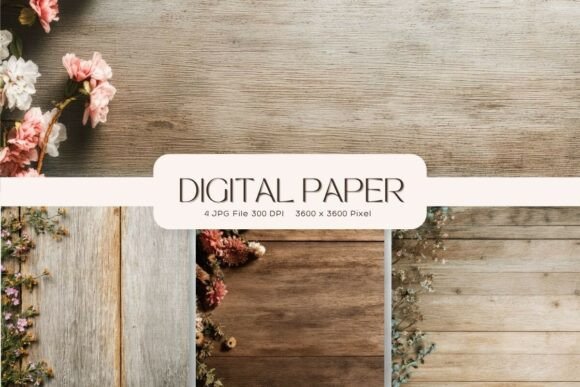
Wooden Florals Texture Backgrounds_5: A Digital Design Essential
There's a certain warmth and authenticity that organic textures bring to a project. They ground a design, add a layer of tactile interest, and can instantly evoke a specific mood or season. This is precisely the appeal of Wooden Florals Texture Backgrounds_5. It's not a font in the traditional sense, but a collection of high-resolution digital papers that serve as a foundational design asset. Imagine the subtle grain of natural wood, seamlessly intertwined with delicate floral patterns—this is the core personality of this set. The style leans into a rustic yet elegant aesthetic, perfect for projects that need a touch of nature without sacrificing sophistication.
The visual character of these backgrounds is versatile. The wood grain provides a sturdy, organic base, while the floral elements introduce softness and color. Depending on the specific sheet, you might find spring blooms against light pine, or autumnal leaves layered over darker oak. This duality makes it a powerful tool for creating depth and visual hierarchy in your work. It functions beautifully as a display element, capturing attention in a header or hero image, but its texture also holds up as a nuanced backdrop for body text or smaller graphic components when used thoughtfully.
Where These Textures Shine: From Screen to Print
The true value of a premium asset like this lies in its adaptability across mediums. For web design, these JPGs can become stunning website backgrounds, blog post headers, or featured image bases that set a brand's tone immediately. A lifestyle blogger or a small business selling handmade goods could use these to create a cohesive, inviting brand identity that feels both personal and professional. In social media graphics, they provide a ready-made, eye-catching canvas for quotes, announcements, or product showcases, helping content stand out in a crowded feed.
Moving beyond the digital screen, the applications for print and physical products are extensive. As noted, the files are delivered as high-resolution, 300 DPI JPGs in a standard 12"x12" sheet size. This makes them ideal for packaging design—think product labels, gift wrap, or shopping bags for a boutique or artisan market. They are equally at home in editorial design, serving as beautiful backgrounds for magazine features, cookbook layouts, or wedding stationery suites. For crafters and hobbyists, printing them out for scrapbooking, card making, or as unique wrapping paper is a direct and rewarding use.
Making It Work: Practical Guidance for Your Projects
Integrating any strong texture requires a bit of strategy to ensure it enhances rather than overwhelms your message. The first step is always to evaluate the project's fit. Ask yourself: does the rustic-elegant mood of Wooden Florals Texture Backgrounds_5 align with the project's goals? It's perfect for a florist, a farm-to-table restaurant, or a nature retreat brand. It might be less suitable for a sleek, futuristic tech startup, unless used in a very subtle, cropped manner for contrast.
When it comes to font pairing, think about contrast and complement. The organic texture pairs wonderfully with clean, modern sans serif typefaces for a balanced look. Alternatively, a classic serif font can enhance the traditional feel. For a more personal touch, a simple script font or handwritten font can be used for accents, but ensure it remains highly legible against the detailed background. Always test your text for readability. Place your chosen typeface over the texture and squint—if the text blurs into the background, you need to adjust the color, size, or add a subtle overlay or shadow.
Remember that this is a digital file. Colors will render differently across devices and printers. Before committing to a large print run, do a test print on your intended substrate—be it paper, cardstock, or fabric—to check how the inks interact with the material. The flexibility to adjust the size from the 12"x12" base is a significant advantage, allowing you to scale the pattern to suit a small sticker or a large wall poster. By treating these backgrounds as a versatile component within your larger design toolkit, you can create work that feels both unique and consistently polished, building a recognizable aesthetic for your brand or personal projects.